Repeat after me: Do NOT buy a used car without having YOUR mechanic check it over carefully 02/23/2012
Got a call this afternoon that proved the wisdom that I learned at age 15 (far too long ago): NEVER RELY ON THE SELLER'S ASSURANCES IN A USED CAR SALE IF THERE IS AN "AS IS" STICKER IN THE WINDOW! If there is an "As Is" sticker in the window, you should treat the salesperson as if they were wearing a sign that says "You cannot rely on a word that I say." You MUST take the car to your own trusted mechanic and have that mechanic do a thorough inspection, including a compression and timing check for all cylinders, checking for signs of undisclosed frame damage, suspiciously new components, etc. If you cannot afford this pre-purchase check, you can't afford the car anyway, so get away from there before you get ripped off. REMEMBER: There are no used cars being sold in Oregon that are too good to pass up. There are plenty of good used cars being sold every day for a fair price -- if you miss one, there will be plenty of others available when you've saved up a little more money. By the way, like many people, the caller thought that there was a 3-day right to return the car. Nope. If you sign on the line and drive away, you. are. stuck. So be sure before you do! P.S. Never finance with the dealer. Arrange your financing before you shop with your credit union. (You are in a credit union, right?) Don't discuss financing at all until you have picked the car you like and your mechanic has done a thorough inspection. IF, at that point, you still want the car, negotiate with the dealer without disclosing that you already have financing. If the dealer quotes a price, ask if that is the best price and ask what the cash price is -- since you have your own financing arranged, you are the same as a cash buyer, which merits a discount. Add Comment Another Phishing Scam to Watch for 02/16/2012
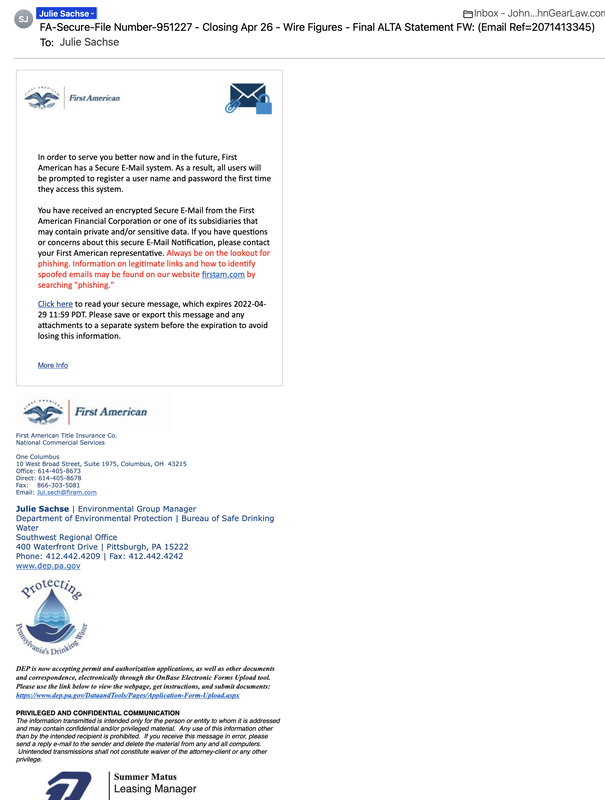
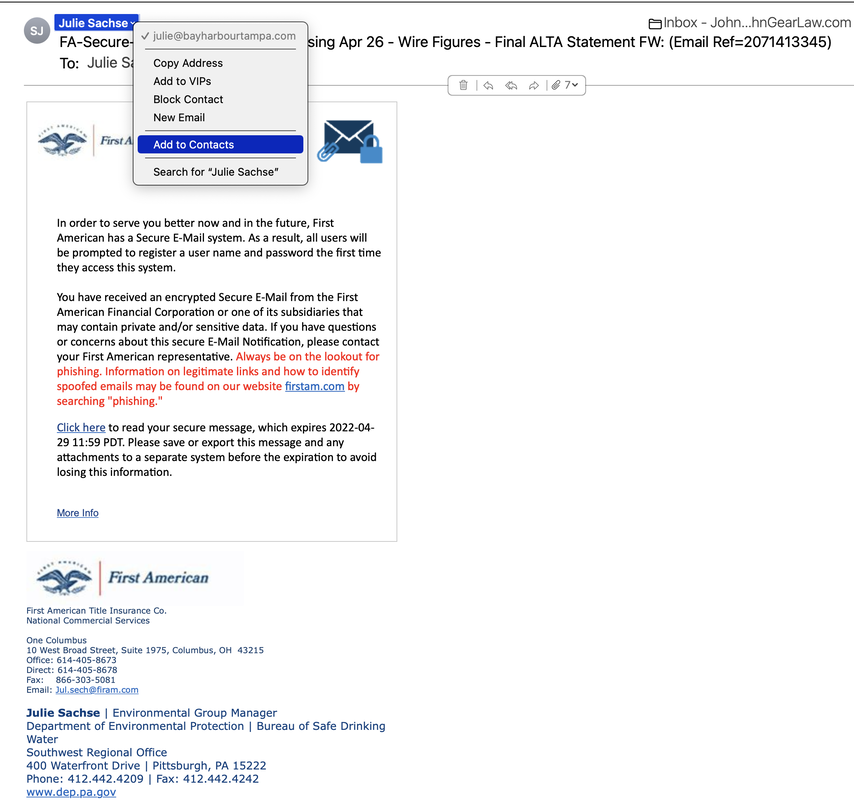
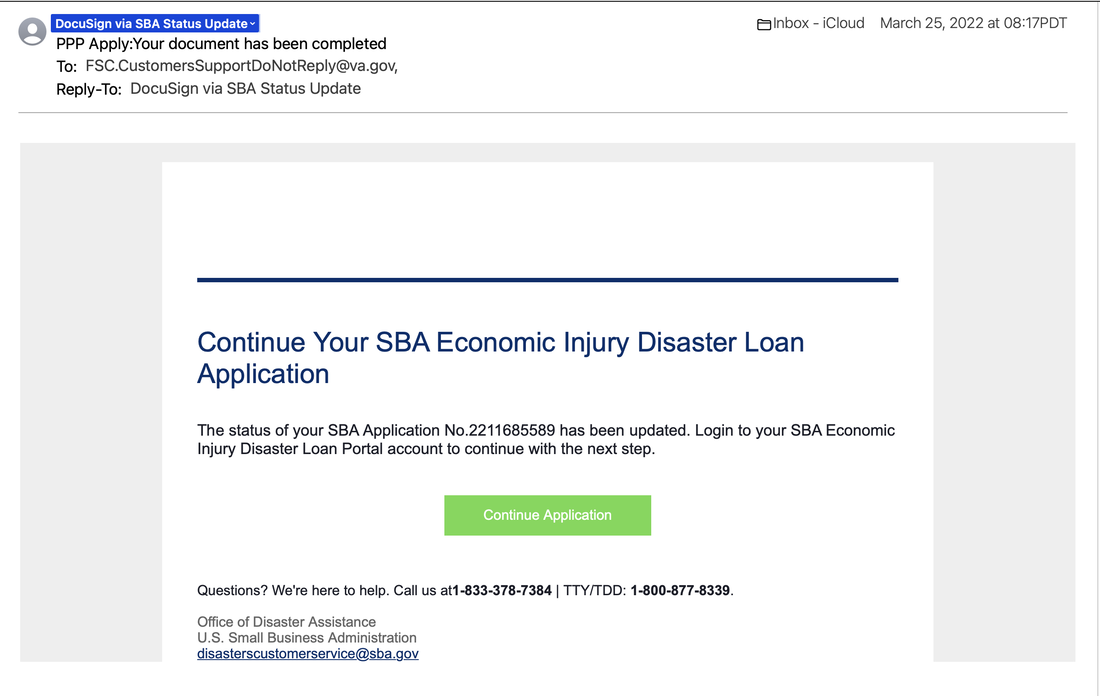
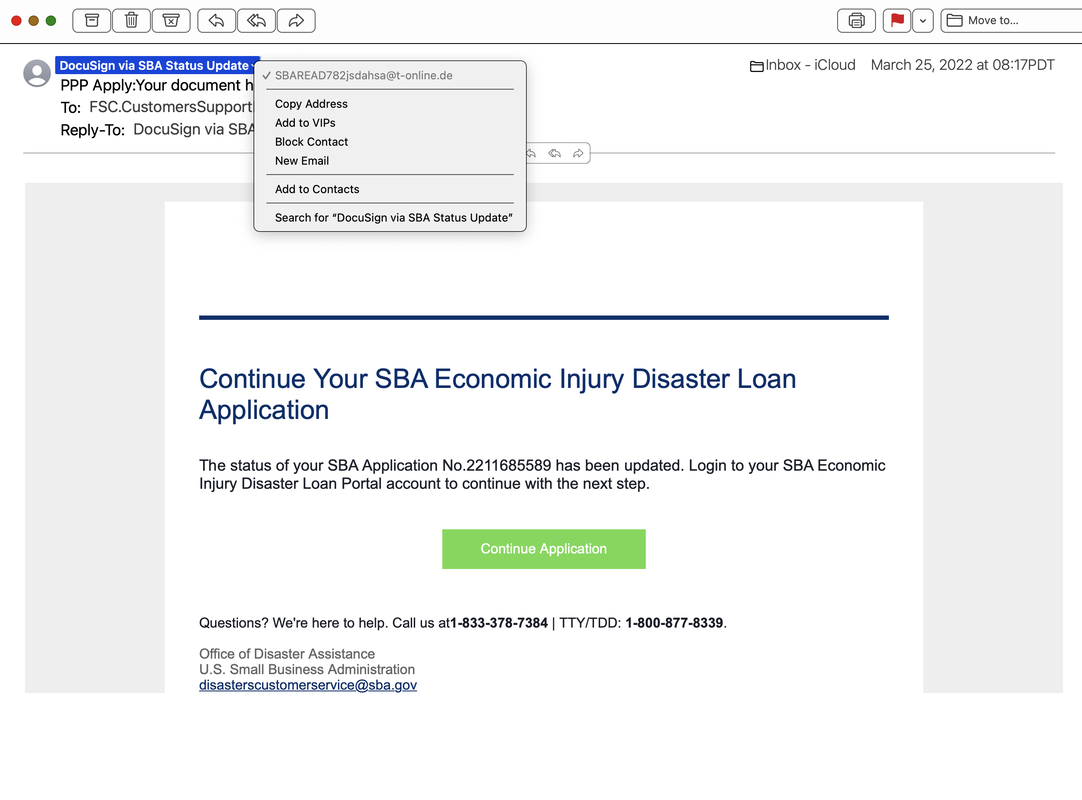
In the never-ending Darwinian struggle of predators and their intended prey, the phishing scammers (the people who try to gull you into revealing sensitive information to them by sending you a convincing but deceptive email that baits the trap so that you will click on a weblink or download a destructive file) are getting better and better, meaning that those of us who don't want to be prey need to more perceptive and careful all the time. Below is today's first scam. What's interesting is how good the email looks -- but when you hover your mouse over the baited link (DON'T CLICK UNKNOWN LINKS, hover over them with the mouse to see where they will take you if you are unwise enough to click on them), it reveals a URL from Brazil (carlosbrusman.com.br). I've reposted the below from David Sugerman's blog. As a nuclear engineer and nuclear submarine officer (before I was an attorney), I studied human errors intensively and am very well-acquainted with the research on human error tendencies in pressure-filled situations. The conclusion of that study? Nearly everything about how modern American medicine is organized is BAD for patient safety and INVITES DANGEROUS ERRORS that hurt people. NASA, the submarine force, the aerospace industry, and computer manufacturing are just a few example of where errors are systematically studied and analyzed and changes made TO PREVENT THE SAME MISTAKES FROM HAPPENING AGAIN AND AGAIN. But hospitals (especially) and medicine as a whole fight tooth and nail to resist all of the best practices designed to eliminate dangerous errors. There is a problem that high malpractice premiums highlight -- but that problem is a "system" that systematically ignores patient safety. Instead of focusing on reducing the harm from errors, they concentrate almost all efforts on preventing the victims of these systemic errors from trying to seek justice. As an attorney who focuses on consumers, elders, and nonprofits, I don't have a dog in this fight - I'm not writing as someone who brings claims over violations of patient safety. But as someone with a lot of training in identifying and managing high-risk operations safely, I know that I'm always floored when I go to hospitals and clinics by how absolutely primitive these places are in their (dis)organization, and how often it's just a matter of luck that even more people aren't hurt by their dealings with the medical system. Here's the original post: Memo to the Oregon Legislature: Healthcare Transformation Starts with Patient Safety The Oregon Legislature is back in session and grappling with proposed health care transformation. Yesterday, we learned that some legislators are more concerned about “defensive medicine” and putting an arbitrary limit on access to justice for Oregonians who are on the Oregon Health Plan or Medicaid rather than they are about keeping patients safe. Did you know that more than 98,000 Americans die every year from medical errors? Here is some context: That number is equivalent to a 747 jet liner crashing every day of the year killing all on board. So when we talk about healthcare transformation, shouldn’t we really be talking about patient safety? We need to focus on the real problem with health care delivery and that is keeping patients safe and informed. Recently, Legacy Emanuel participated in a national study where they implemented simple procedures and check lists for all hospital staff to follow. You know, things like washing your hands between each patient, making certain all medical equipment is accounted for before finishing a surgery, that the patient is the same person as the chart on the end of their bed. According to the Oregonian’s report on that study, Legacy saved over $13 million in one year, cut down on medical errors and significantly lowered their infection and injury rates. Imagine the cost savings if these check lists and procedures were implemented in every Oregon health facility. Imagine the health improvement and lives saved from real health care transformation that starts with patient safety. Instead of focusing on patient safety, we have legislators holding forth about something they call “defensive medicine,” They are using that label as a tool to put arbitrary monetary limits on patients’ rights. Here is a modest proposal: If we’re going to talk about things like this, let’s resolve to get the facts straight. The label “defensive medicine” presumably refers to tests ordered by a provider for purposes of preventing or defending against a lawsuit. A provider who orders testing with no therapeutic value commits insurance fraud, violates Oregon law, and ignores the first rule of medical ethics to do no harm. The doctor who orders unnecessary tests puts the patient at risk by subjecting the patient to an unnecessary medical procedure. And legislators think that Oregon doctors routinely order unnecessary tests, committing Medicare or insurance fraud and putting patients at risk because what? To keep insurance premiums lower? Really? In the same opinion piece there was a second solution to “the problem.” There is a reason for the quotes: No one has ever identified the problem. Even for lack of a problem, some Oregon legislators seek to impose a two-tier justice system. Under the plan that is a solution in search of a problem, the two-tier system would mean two levels of justice. The first tier is reserved for individuals with private insurance. The second tier is for patients on the Oregon Health Plan (OHP). The new legislation would strip OHP patients a basic constitutional right to trial by jury and instead and would limit or cap how much OHP patients can sue for when they are injured due to negligent, substandard medical care. That’s right, under the solution to the non-problem OHP patients claims would be limited even when a provider gives care that is proven to be negligent. The legislators pushing this agenda presumably are doing it in the name of lower doctor malpractice premiums. What they are not saying is that this solution to non-problem has been tried in other states. The result: No noticeable effect on doctor liability insurance premiums. Under this emerging plan, if you have the good fortune to have your own insurance, you would be able to hold a negligent care provider accountable for substandard or negligent care. If a surgeon mistakenly amputates the wrong leg and you are on OHP, the two-tier system of justice would limit your access to justice, no matter how egregious the negligence, no matter how high your lifetime medical costs, no matter your life situation. And this limit would take the form of a fixed limitation set by the Oregon Legislature. Because those who believe that their solution is necessary are also dead certain that the Oregon Legislature is better able to set damages in all cases than a jury that decides each case on the evidence. It’s time that the political agenda of the few take a back seat to patient safety. It is time to make certain that health care transformation puts patient safety first. This is a very good example of how to do it right when you try to alert customers or stakeholders about a "phishing" attempt. "Phishing" is where the scam artist dangles a lure and tries to lure you to bite on what appears to be a safe-looking link that actually leads you to a specially-disguised website, where they get you to give them your private data, all while making it appear that they are helping you). Willamette Valley Bank is a local institution, and this email (complete text below, image above) is a well-done warning. Some phishing warnings are so poorly planned that you can't tell whether it's a genuine warning or more phishing. The text of the WVB warning: Dear Client & Friend, We recently received a communication alerting us to the fact that there may be an attempted phishing attack in progress. Because we care about the safety of our clients, we are providing you with information and steps to take if you receive this fraudulent email. Phishing is a form of fraud that is used as an attempt to acquire personal information such as usernames, passwords, and credit card details. The most common way this is attempted is through email. Emails have been received that reference the "eNFact" product. These emails have been directing recipients to click on a link (shown in the e-mail sample below) which will take them to a mock-Fiserv site which is believed to be installing malicious software onto computers. The phishing attack will come in an email similar to the one that follows: [see image above] 1. Do not open the email; 2. Do not click on the link contained in the email; clicking on any of the links contained in the email may install malicious software on your system; 3. If a link is clicked, steps should immediately be taken to protect your computer and/or network; 4. Delete the email from your "Inbox" and "Sent Items. Please rest assured that your personal information stored on Willamette Valley Bank computers is secure and this threat does not compromise that information. If you have any questions about this at all feel free to contact us: Scam d'jour, this one aimed at Vets 01/26/2012
From a public-spirited attorney in Washington, Peter Fels, who passes on this warning from a Spokane attorney, Dick Sayre. No reason to think it stops North of the Columbia River. Folks, the Attorney General is accepting complaints about VA scams which are spreading over Washington like a small plague. They are working with the VA, who is not at all amused by these goings on. Of particular interest to the AG are non lawyers selling insurance products and/or irrevocable trusts to disabled seniors with a purpose of shielding assets from VA so as to gain acceptance for Aid and Attendance benefits, but lawyers here and in other states taking part in the scams are also a target of their investigations. As most of you know, VA does not have a lookback or penalty for gifting assets, making this what appears to be an easy sale for the annuity sellers, who charge for the 'service' and get commissions from the trusts and annuities. That will likely change as a consequence of this practice. As many of you know, clients are being talked into making gifts to children, who then either put the funds into an irrevocable trust or buy an annuity 'to keep the funds safe'. They then apply for Aid and Attendance benefits but, of course, when they later need Medicaid, they are faced with a huge penalty period and extended ineligibility. DSHS will deny eligibility or deem assets to be in a constructive trust; however, often the client cannot get them back - it's the worst of all worlds. I have dealt with a number of these cases, and everyone ended badly for the clients. Here in Spokane, the VA experts are approaching AFH's and nursing homes for presentations, and are being given a warm welcome given that the money goes to the facility. When the next one of these goes bad, I'll be visiting with some of the litigators on this list about the forseeability of injury when the facility sets these creeps up as experts for financial gain. The agents pass themselves off as VA experts and have business entities with snappy titles. They make huge profits for advice and healthy commissions from crappy annuities sold to desperate people without any warning of the consequences of this approach. As most of you also know, the VA helps people apply for A&A without cost. If you have complaints, please direct them to Brooks Clemmons or file a complaint as set out below. Here is contact information for Brooks: brooksc@atg.wa.gov and (509) 456-3282 (direct line) It would be helpful to the AG if people filed a complaint online at www.atg.wa.gov as those complaints go straight into their bank of complaints and are coordinated with similar complaints. The AG would like to find out if there are persons or families that have been approached or have been taken in as a consequence of these unethical and fraudulent practices. In Brooks words: It is our fervent desire to stop this practice and stop others from being harmed. I have filed several complaints, and I know others have as well. I've also created some havoc with annuity companies, but most won't budge absent litigation. Meanwhile, the client is without services or money. It is now reaching epidemic levels, and I ask you all to refer cases to the AG so we can prevent more people from being irreparably harmed. Dick Sayre Sayre & Sayre, PS Spokane The other day I warned you about a company that has all the hallmarks of a scam debt relief con -- much like this one in NC (bolded points emphasis is mine): RALEIGH, N.C. -- A bogus Florida law firm, which claimed it would reduce consumers’ debts by more than half, has been barred from debt-relief work in North Carolina. Attorney General Roy Cooper announced Tuesday that under a consent judgment approved by Wake County Superior Court Judge Howard Manning, The Consumer Law Group of Boca Raton has agreed to pay $600,000 in refunds to North Carolina customers who paid the company for help getting out of debt. “Debt relief scams take advantage of struggling consumers, adding to their burden instead of helping them get out of debt,” Cooper said. “I’m pleased that we’ve been able to win money back for these consumers, money that can hopefully help them pay off bills and get on better financial footing.” The $600,000 payout is on top of approximately $600,000 worth of charges the company agreed not to collect from North Carolina customers. An additional $50,000 will help cover the state's costs for work on the case. The judgment bars CLG from marketing, soliciting or offering a debt-settlement or debt-negotiation services in North Carolina. CLG is also prohibited from claiming that its services are government-sponsored, performed by attorneys, or provide legal representation for consumers. Cooper’s office filed suit against CLG in October 2010 after a probe determined that more than 650 North Carolina consumers had paid CLG for debt-relief work but gotten little or no help in return. People can continue to file complaints about CLG or other debt-relief companies by calling the attorney general’s Consumer Protection Division at 1-877-5-NO-SCAM toll-free within North Carolina, or filling out a consumer complaint form at www.ncdoj.gov. “Don’t pay an upfront fee for help getting out of debt,” Cooper said. “For real help getting your debts under control, meet with a qualified non-profit credit counselor in your local community, who won’t charge you a big fee.” For help finding an accredited, non-profit credit counselor, contact the National Foundation for Credit Counseling at 1-800-388-2227 or www.nfcc.org. _A very non-descript white #10 business envelope with a see-through address window came in my mail this morning from something I'd never heard of called "Corporate Regulatory Committee" at 1118 Lancaster Drive #369, Salem OR 97301." "Looks official. Who's that?" I wondered. Turns out to be a variant on the old phone directory billing scam, where people you've never heard of send you an oh-so-official looking letter that very much makes it seem like you already owe them money. Somewhere buried in the verbiage of all these things (amidst all the humorous spelling mistakes, like "procedding" -- how many can you find?) is usually some sort of phrase that explains, to the alert reader, that you don't actually owe anything and that this whole thing has no real connection to the organization that the rest of the hit piece is intended to make you think it's from. Plenty of people get scammed by these sorts of things, even some pretty bright but busy people. Don't be one of them. If you get a letter like this, do not pay, of course, but also do not throw it away. Instead, keep it, and alert the Attorney General and the Secretary of State. (No doubt you'll not be surprised to find that 1118 Lancaster Drive is a private mailbox business, so there's another violation, this one of postal rules, which are that PMBs are supposed to put PMB in their return address.) ![]() The image they're selling is a lot different than the reality most people experience from "debt relief" schemes like this _ WARNING -- DEBT RELIEF OPERATION OUT PROSPECTING FOR NEW VICTIMS -- THE BOTTOM LINE IS THAT THESE FIRMS CHARGE A LOT OF MONEY, UP FRONT, TO "NEGOTIATE" ON YOUR BEHALF, AND YOU HAVE NO WAY TO KNOW WHAT, IF ANYTHING, YOUR MONEY WENT FOR (and they write the contracts in a way that guarantees that they get paid whether you get any debt relief or not). Remember, unsecured debt is just that -- it's debt that you can eliminate in bankruptcy, they can't repossess the goods you bought with the credit cards. THAT is your leverage with the credit card companies, NOT the fact that some GFS-like outfit is in the picture. Reputable financial counselors don't use the same sales pitch techniques (the supposedly testimonial note from "Nancy Harper," the blizzard of exclamation points!!, the pitch to get you to give them all your financial info before they tell you anything of substance) that the credit card companies use. If you are in over your head in debt, the best thing you can do is contact an attorney licensed to practice law in your state, or programs like Legal Aid in your community -- stay away from internet come-ons offering fantastic tales of debt elimination. =========== This really works for people! It worked for me! I have tried for a long time. To get out of debt! Until one day, I heard about debt settlement! It is an aggressive way to get out of debt ,and fast!!! So I had a free consultation from one of global financial analyst’s. They sent me a free debt kit to look over all the options out there. With all the pros and the cons of each. I had over $43,000 in credit card debt.. I went with Global Financial Services program and saved close to $18000, and was out of debt in 22 months. It was amazing for me and my two boys! I have extra money in my pocket every month and I don’t have to worry about not being able to make my minimum payment every month. Thank you so much GFS, you really changed my life! Cindy Harper If you’re struggling to keep up with your monthly credit card bills you’re not alone, millions of Americans are heavily in debt and having trouble making the minimum payments on their credit cards. We understand what you’re going through, and we’re here to help! Our debt negotiation program is designed to show consumers how to get out of debt as quickly and smoothly as possible. Debt settlement is a proven system through which unsecured debt is negotiated down to a fraction of what is owed. In exchange, the creditor agrees to forgive the balance, and the account is settled in full. Debt settlement is the most viable option for consumers to get out of debt in the shortest period of time and for the least amount of money. Simply click on the link below and submit your contact information for your FREE Debt Relief Information Kit and a FREE consultation from one of our Trained Financial Analyst. One click could change your life http://www.globalfs.org/debt_kit_landing.php Best regards, Henry Harvey Regional Director Global Financial Services _Translation: When some big company violates the federal laws limiting telephone nuisances, you can go into federal or state court as you prefer; the company doesn't get to waste your time and money trying to force you to file in the other system, regardless of which court you chose. Mims v. Arrow Financial Services, LLC Ginsburg, J., writing for the unanimous Court Full Text Opinion: http://www.supremecourt.gov/opinions/11pdf/10-1195.pdf CIVIL PROCEDURE: (Federal and state courts have concurrent jurisdiction over private suits arising under the Telephone Consumer Protection Act of 1991.) In response to consumer complaints, many states enacted statutes restricting telemarketing and other “abuses” of telephone technology. Recognizing that telemarketers were evading state-law prohibitions by operating interstate, Congress passed the Telephone Consumer Protection Act of 1991 (TCPA), which banned certain practices telemarketers were using (e.g., automatic telephone dialers, use of prerecorded messages, and use of caller ID manipulation) and directed the Federal Communications Commission (FCC) to implement regulations. The TCPA also provided for private parties to bring civil actions “in an appropriate court of that State” and authorized State Attorneys General to bring civil actions on their residents’ behalf with exclusive jurisdiction being given to the Federal District Courts. Petitioner (Mims), a private party, invoked federal question jurisdiction and filed a claim against Arrow Financial Services (Arrow) in federal District Court seeking declaratory relief, a permanent injunction and damages for Arrow’s willful and knowing violation of the TCPA. The District Court dismissed Mims’ complaint stating that federal question jurisdiction was unavailable “because Congress vested jurisdiction over [private actions under] the TCPA exclusively in state courts.” The Court of Appeals for the Eleventh Circuit affirmed and the Court granted certiorari to resolve a circuit split regarding which courts had jurisdiction over private actions brought under the TCPA. In a unanimous decision, the Court held that because district courts possess federal question jurisdiction for claims arising under federal law and since Mims’ TCPA claim is based on a private right of action created by federal law, the lower court erred in dismissing his case for lack of subject-matter jurisdiction and that private TCPA claims may be brought in either state or federal court. | AuthorJohn Gear is a Salem attorney whose practice is focused on serving Oregon consumers, elders, and nonprofits. CategoriesAll ArchivesFebruary 2012 |


RSS Feed