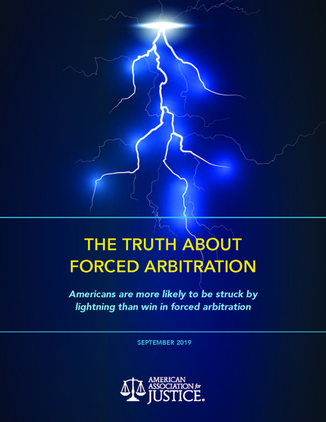
Great story in an intriguing San Diego nonprofit news outlet called "Justice for Sale: Arbitration Purgatory." The story is about what happens when you try holding a car dealer accountable. Thanks to the US Supreme Corp's love affair with arbitration -- the dispute resolution method intended for parties in parity with each other, and typically for those who need to keep dealing with each other -- consumers increasingly find that they have signed away their constitutional right to a civil trial. When you get ripped off by a big company these days, most often you will find that they have locked you into an arbitration agreement where they not only get to keep you from having the dispute heard by a jury of your peers, they also get to choose the forum. And since the big companies are the only repeat players in the game, guess who the arbitrators (who are themselves totally unaccountable to you) worry about pleasing? Hint: It's not you. Part 2: Justice for Sale: Ignoring the Law
Part 3: Justice for Sale: The War on Consumer Class Actions
 Note the attempts to make it seem to come from a government source The folks who prey on the elderly -- the Elderscammers -- never tire of trying to make their scam letters appear to come from an official source (anything that will get you to open them). When you get mail in an envelope that looks like this, your best bet is probably to recycle it immediately without even opening it.
If you are really torqued about their deceptive technique and want to make it a bit more expensive for them, here's one thing you can do: Open the envelope, but only so that you can find out if there is a postage-prepaid "Business Reply Envelope" inside (there often are). If there is a BRE, take a dark marker and write "STOP SENDING ME JUNK" on the reply card, and draw a big X over the part where they want you to give them all your personal information. Then stuff everything they sent you into the BRE, seal it, and drop it in the mail. This has proven remarkably effective at getting them to stop sending me any such junk. Sadly, all my elderly neighbors and friends keep me well supplied in examples of this kind of scam. (This one was another come-on for funeral expenses insurance, the biggest ripoff this side of waterline insurance plans.)
Mixed in with the many honest businesses, I'm sad to say that there are a TON of ethically challenged businesses out there too. They especially prey on elders, offering them outrageously overpriced goods and services, using all the time-tested tricks of the trade, trying to make it look like they are doing you a favor, and that you might have to "qualify" to do business with them -- when the only qualification is excessive trust in strangers by you, and a willingness to give out private information to total strangers. These people will use any information they can get to take advantage of you (and they will sell and trade that information to similarly exploitation-minded outfits -- along with the key fact, that you were so foolish as to respond to their mailing).
There's a good saying that "Good deals don't call you on the telephone" and the same goes in spades for junk mail like this. Honest businesses don't try to make money off you by selling you wildly overpriced insurance. I wish there was a way to require outfits like this to put a skull-and-crossbones watermark on every page of every letter they send out, because then you'd have a chance of realizing what pirates they are.
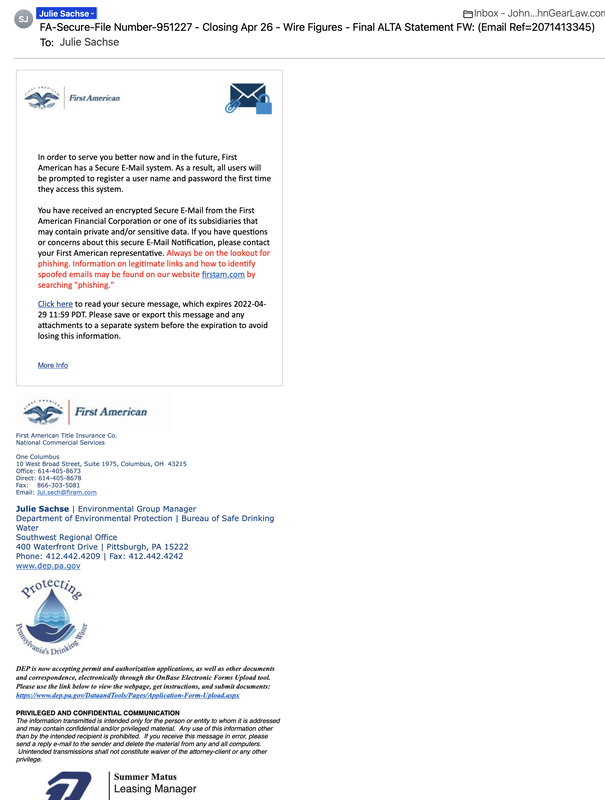
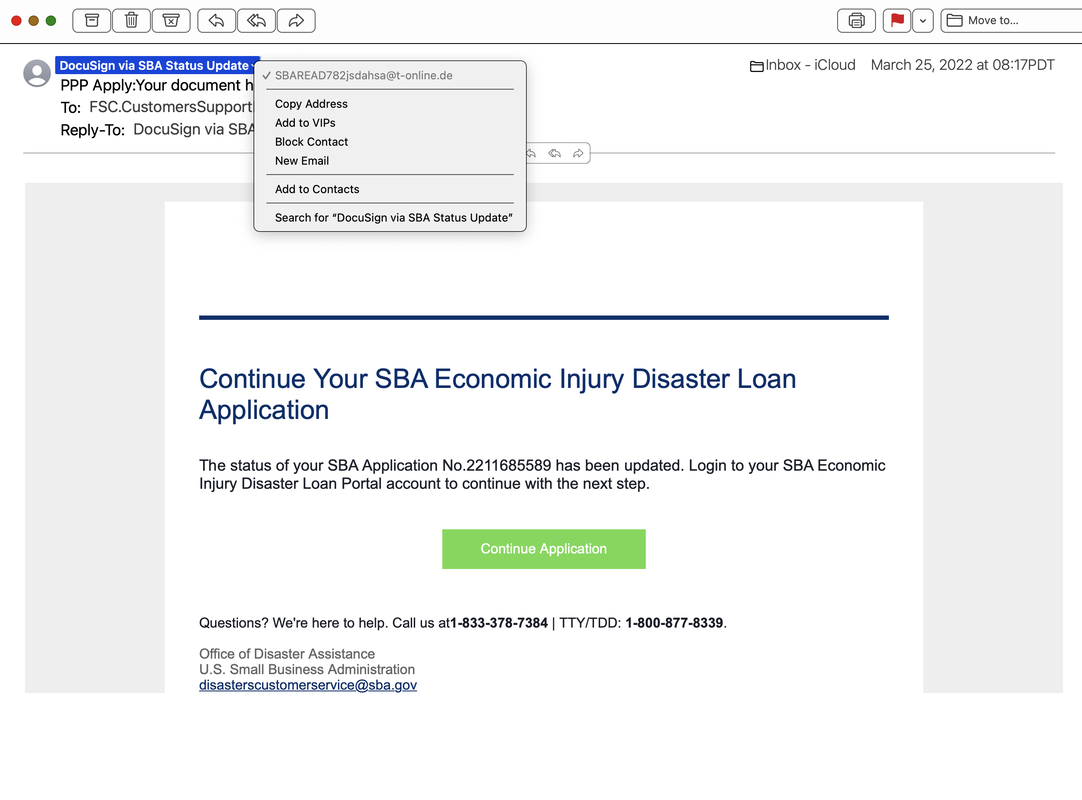
Take special notice of how this works: you get a very official looking email from "Service@paypal.com" --
And that address (Service@paypal.com) is all that appears in the email reader.
It's only when you right-click on it to make it reveal the full address is the bogus actual address (peypal.com) revealed ... and some folks would miss the shift anyway (peypal vs. paypal). "Phishing" is where the scammer doesn't steal your information directly -- rather, the scammer "fishes" for information in such a way as to lure you into GIVING it to him/her. Don't fall for it!
Remember, simple online safety rule #1:
Observe the same safety precautions online as you do on the telephone. Just as you would never give out personal information to someone who called you (RIGHT??), you should never give account information about yourself or your digital world to anyone who initiated the contact with you, particularly through an email.
The last time I called one of these things a scam I got a call from a $500 an hour law firm in Virginia who insisted that I remove the post because, no matter how absolutely horrible, no good, outrageously overpriced, predatory, just-this-side-of-illegally-deceptive and slimy their product was, they felt I disparaged them by calling it a scam. So, lesson learned. This may not be a scam -- the company below may indeed pay claims purchased under this absolutely horrible, no good, outrageously overpriced, predatory, just-this-side-of-illegally-deceptive, slimy insurance offer. But you'd be a fool to find out, because you'd have to buy one to find out, and that would mean that you'd not only pay an absurd amount for a tiny benefit, but you'd also find yourself getting a blizzard of mail from similar outfits, because these outfits all trade "sucker lists" as they refer to them, and once you take the bait on one, they all cast their lines in your direction and try to reel you in. Don't fall prey to these kinds of things. If you're concerned about funeral expenses, contact the Funeral Consumer Alliance of Oregon, an affiliate of the national Funeral Consumers Alliance and learn more about how to minimize the costs for disposing of your remains, and how to avoid getting taken. And remember the basic rule: never do business with anyone who tries this kind of deceptive marketing (the attempt to make their commercial pitch appear to be an official letter). The simplest and best thing to do: just recycle it without even opening it.
I got into a brief online discussion of the latest US Supreme Court Inc. decision upholding the "rights" of corporations (fictitious persons that are actually nothing but piles of property given certain permissions) to force consumers into arbitration.I noted how odd that the folks who were all upset about the Affordable Care Act ("Obamacare") were paying no attention at all to Supreme Court Inc.'s far more radical steps into post-Constitutional law in the area of turning state governments into legal nothings. Essentially, since Justice Rehnquist, the main thrust of Supreme Court Inc. has been to dispense with states entirely and turn the US into a single, monolithic entity where corporations are free to to locate in and claim the legal protections of the most backward states, while using a pre-Depression statute, the Federal Arbitration Act, in ways that its authors and courts never imagined it would be twisted. Thus, since the 1970s, Supreme Court Inc. has moved to turn real people -- the ones whom the Founders who drafted the Constitution thought government was supposed to serve and protect -- into faceless non-entities who, in any conflict with corporations, should and almost always do lose. The apogee (so far) of the Court's decision to enshrine corporate power where the Bill of Rights used to be is the notorious Citizens United decision. In Citizens United, the corporate power radicals on the Court, with no necessity to reach the issue, undid nearly a century of work to limit the sale of elections to the highest bidder. And that was just one example of Supreme Court Inc.'s relentless push to endow property with Constitutional rights, even as those rights that are clearly written into the Constitution for protecting people from oppression -- like the 7th Amendment right to civil jury trials -- are turned into dead letters.
Astonishingly, the radical justices most enamored of this ever-expanding, federalism-destroying posture are the ones who like to call themselves "conservative." (They also love to claim to follow the original intent of the Constitution's framers, regardless of their own personal preferences -- apparently the Founders loved corporate power much more than they thought they did!) In the exchange, Prof. Peggy Radin of the University of Michigan Law School concisely summed it all up as follows: Yes: Arbitration clauses are a threat to federalism because they are ousting state law consumer protection, aggregative remedies, and much else.
Arbitration clauses are also a threat to the common law itself, and therefore to common law adjudication and the power of common law judges. The more the power to decide disputes is transferred to nongovernmental private parties whose decisions are without any public record and without any precedential value, the more the common law system is undermined. There is no opportunity to know whether like cases are treated alike, and no opportunity to rely upon past decisions in planning future actions.
Arbitration clauses are also a threat to the rule of law, because they are destroying the right to redress which must be part of a legal system that honors and enforces the rights that it is set up to establish and protect. They are privatizing what must be public. The opportunity to rely on public decisions that are precedential in order to plan future actions is also a requisite of the rule of law. A regime of ad hoc decision making giving no notice to those who are subject to the law violates the rule of law.
For the same reasons as above, mass market arbitration clauses make a mockery of equality before the law.(Prof. Radin is the author of "Boilerplate: The Fine Print, Vanishing Rights, and the Rule of Law," in which these (and other) issues are discussed.)
My elderly neighbor called me today with a question about a man who had approached her while she was raking leaves. He offered to remove the moss from her roof for $150 -- told her he would remove all the moss and leaves, and haul everything away and put an "EPA-Approved" chemical on the roof to keep the moss from coming back. Luckily, my neighbor is getting wily and she had the sense to tell the guy that she needed to check on him -- she called me, and some things she told me about the guy didn't add up, so I looked for a Construction Contractors Board registration, and I found that he was not a registered landscape contractor even though he was going under the name of a landscaping company (which show up under CCB). I also called the Attorney General's Consumer Protection office. More importantly, the guy also shows up in the photo listings of Marion County parole violators.The take-home lesson: NEVER let anyone start working for you, especially on your roof or inside your house, without checking on them first. (You don't want an unlicensed, uninsured person up on your roof, even if they don't intend to rip you off.) Also, never do a handshake deal with a door-to-door service provider; make them give you a written contract showing exactly what they are going to do for you and how much it will cost. If a business is so fly-by-night to not even have contract forms, they are obviously too fly-by-night to hire. (Conversely, don't be fooled by slick brochures and spiffy forms -- just because they have a truck with signs and matching shirts and slick materials doesn't mean that they aren't also crooks.)BOTTOM LINE: Every legitimate service provider -- whether it's a pressure wash of your driveway or removing moss from your roof or washing your windows -- will not object if you say that you want to take their business card and you will call them back if you decide to hire them after you've had a chance to check them out. Anyone who insists that they're only going to be in your neighborhood today, or that their registration is "too new to show up" or that they'll be too busy to come back later is setting you up. Send them packing, and call the Construction Contractors Board and the Attorney General to report them.
|