A student loan expert writes:

The Dept. of Ed has released a new form for borrowers who wish to select Income-Based Repayment (IBR), Income-Contingent Repayment (ICR), or the new Pay-As-You-Earn plan (available starting tomorrow).  This form replaces the repayment section form AND the alternative documentation of income form (ADOI). 

Borrowers should use this form; however, the Department of Education will continue to accept the old forms until April 2013.
 
Here is the Department’s announcement: http://www.ifap.ed.gov/dpcletters/GEN1222.html.
 
With luck, having only one form to complete will be easier for borrowers. 


foreclosure_defense_8-16-12_bain_v_mers_wa_state_supremes_great_decision.pdf
File Size: 113 kb
File Type: pdf
Download File

The Washington Supreme Court today announced an important decision, finding --- as the Oregon Court of Appeals just did recently in the Niday case --- that the phony-baloney attempt to dodge recording fees known as MERS can't have it both ways and claim to be just an administrative convenience AND force people out of their homes.  Another blow for justice in the Northwest.
 
 
Picture
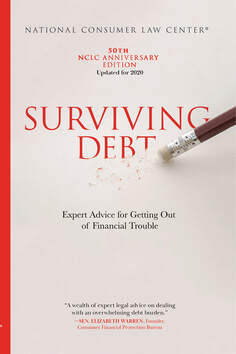
The good folks at the National Consumer Law Center have just issued a new report that addresses a lot of the problems with student loan lending (pdf download), particularly the problems caused by for-profit "education" mills that really seem to be about something quite different than education.

 
 
Picture
The Oregon Court of Appeals has ruled that the hydra known as MERS -- the monstrous placeholding dummy with a million phony vice-presidents, which the mortgage servicing industry created to attempt to evade the requirement (and the fees) that all transfers of interests in mortgages be recorded -- cannot use the streamlined, fast-track nonjudicial foreclosure process in Oregon! 

Niday v. GMAC Mortgage, LLC et al,

"[T]he import of our holding is this: A beneficiary that uses MERS to avoid publicly recording assignments of a trust deed cannot avail itself of a nonjudicial foreclosure process that requires that very thing-- publicly recorded assignments."


The nonjudicial foreclosure process was created in the old days when lenders held onto their mortgage loans, which were actually underwritten thoughtfully.  Fast forward to the slice-and-dice fast-money 1990s-2000s, when the banksters and money men started financializing everything and you suddenly had a tool that was being used against homeowners in ways never intended, by an entity never imagined by the law, a weird hybrid creature that pretended to be both the beneficiary of the loan (when useful to MERS) and not the beneficiary (again, when useful to MERS).

Hurrah for the Oregon Court of Appeals.  BULLSEYE!  Seems likely the MERS scammers will appeal but, for now, a true shining example of Oregon flying with her own wings and reaching the right conclusion despite a number of other states having missed the mark widely on this issue.


A frustrated lawyer in Alabama sums it up eloquently:

     This whole area of law is completely out of control. We are creating a subclass of educated (and some not-so-educated) poor people. We are basically creating a class of indentured servants who were essentially unknowingly induced into loans that they cannot repay. Many were sold a bill of goods that they could get good jobs upon graduation and repaying their loans would not be a big issue, then the economy tanked.

     This is a worse crisis than the mortgage crisis.
     At least with a mortgage, once they foreclose, you can walk away - student loans are making American citizens slaves to debt collectors and banks - two of the most unscrupulous entities in our society.
     The taking of 80 year olds' social security money to pay on 30 year old student loan debt is beyond inhumane. I am shocked there has been no rioting or occupy movements based on the outrageous laws Bush signed into law making student loans super-liens on par with, or maybe even above, the IRS.
     Our founding fathers would not have stood for this type of treatment of their American people. This is a shameful time.
 
 
Picture
No one is immune from bankruptcy. That's the message of a national survey released today by a South-Portland-based financial nonprofit. High-earners and college graduates are among the fastest-growing group of debtors filing for bankruptcy, according to the Institute for Financial Literacy. Bankrupty filing rates for people making $60,000-plus increased by more than 66 percent; college graduates by 20 percent. -- Maine Public Broadcasting report

Since "get a college education" is so often prescribed as the cure-all for all our ills, the warning photo to the left is apt -- the higher ed bubble is showing all the same signs as the housing bubble did in its last, frantic moments.  Here's a good example of how cut-throat the student loan business (and it IS very much a business) has become.  Colleges are holding transcripts hostage, which makes it difficult for the borrowers to get the job they need to pay the loans:

     This is happening at a time when recent grads are finding it particularly hard to find work, not just in their chosen fields, but anywhere. About half of recent college degree-holders were unemployed or underemployed last year, according to a recent Associated Press study. And the federal Consumer Financial Protection Bureau estimates student loan debt has passed $1 trillion, an amount greater than all outstanding credit card debt. The Department of Education put the default rate at 8.8 percent of student borrowers as of September 2010.

     It's no accident that colleges are using the withholding of official transcripts to punish students behind in their loan payments. It turns out the federal government encourages the practice. Schools are not required by law to withhold transcripts, but a spokeswoman at the Department of Education confirmed that the department "encourages" them to use the draconian tactic, saying that the policy "has resulted in numerous loan repayments."

     It is a strange position for colleges to take, however, because the schools themselves are not owed any money. Student loan funds come from private banks or the federal government. For federal Perkins loans, schools get a pool of federal money to apply to students' financial aid, and if students don't pay, that pool gets smaller. But the creditor is still the government, not the college. And in the case of so-called Stafford loans, schools are not on the hook in any way; they are simply acting as collection agencies, and in fact may get paid for their efforts at collection.


The other day I warned you about a company that has all the hallmarks of a scam debt relief con -- much like this one in NC (bolded points emphasis is mine):

RALEIGH, N.C. -- A bogus Florida law firm, which claimed it would reduce consumers’ debts by more than half, has been barred from debt-relief work in North Carolina.   Attorney General Roy Cooper announced Tuesday that under a consent judgment approved by Wake County Superior Court Judge Howard Manning,

The Consumer Law Group of Boca Raton has agreed to pay $600,000 in refunds to North Carolina customers who paid the company for help getting out of debt.   “Debt relief scams take advantage of struggling consumers, adding to their burden instead of helping them get out of debt,” Cooper said.   “I’m pleased that we’ve been able to win money back for these
consumers, money that can hopefully help them pay off bills and get on better financial footing.”
 

The $600,000 payout is on top of approximately $600,000 worth of charges the company agreed not to collect from North Carolina customers. An additional $50,000 will help cover the state's costs for work on the case.  The judgment bars CLG from marketing, soliciting or offering a debt-settlement or debt-negotiation services in North Carolina. CLG is also prohibited from claiming that its services are government-sponsored, performed by attorneys, or provide legal representation for consumers.

 Cooper’s office filed suit against CLG in October 2010 after a probe determined that more than 650 North Carolina consumers had paid CLG for debt-relief work but gotten little or no help in return.  People can continue to file complaints about CLG or other debt-relief  companies by calling the attorney general’s Consumer Protection Division at  1-877-5-NO-SCAM toll-free within North Carolina, or filling out a consumer complaint form at www.ncdoj.gov.

 “Don’t pay an upfront fee for help getting out of debt,” Cooper said.
“For real help getting your debts under control, meet with a qualified non-profit credit counselor in your local community, who won’t charge you a big fee.”

 For help finding an accredited, non-profit credit counselor, contact the National Foundation for Credit Counseling at 1-800-388-2227  or www.nfcc.org.
 
 
Picture
_To the left is a pretty extensive laundry list of lawbreaking committed by a Georgia debt collector against consumers in that state.  These guys broke the federal Fair Debt Collection Practices Act (FDCPA) in just about as many ways as they could.

Keep this list in mind -- if a debt collector ever does any of this to you or anyone you know, contact a consumer attorney immediately.  Keep all phone messages, voice mails, and every bit of correspondence you get from the debt collectors, and make a record of when they call, their names, and numbers. 


If you are in Oregon and you know of anyone who has experienced any of these violations, I would be glad to assist.  Courts can and have hit debt collectors with "statutory damages" of up to $1,000 for each individual violation committed against a consumer, PLUS making the debt collector pay the attorney fees for the consumer bringing the action.


John Gear Law Office LLC; 503-339-7787; John@JohnGearLaw.com. My office is in Suite 208B of the Security Building in downtown Salem. That's at 161 High St. SE, across from the Elsinore Theatre, just a block south of Marion County Courthouse. There is abundant, free, 2-hour on-street parking throughout downtown. #### #### #### Lawyerly fine print: Licensed in Oregon. This site may be considered advertising under Oregon State Bar rules. There is no legal advice given or intended on my site. I'm not your attorney unless we have met in person and entered into a representation agreement; while I hope you will consider me when you seek an attorney, you should not hire any attorney based on brochures, websites, advertising, or other promotional materials.